
Corporate dining services · Austin since 2014
Since 2014 we have fed Austin offices from one commissary, on a route that leaves at 06:30.
We are a workplace food-service operator, not a caterer. Around 40 people cook, drive, service coffee machines and run staff canteens for Austin offices, Monday to Friday. This page is about who they are and how the day is organised.
2014The year the first route ran
Who runs this
A kitchen business that happens to deliver, not a delivery business that buys food.
Continental Serves is the trading name of Continentalserves, the operator of continentalserves.net. We are a services business based at 46 Market Street, Suite 4, Austin, Texas 59966, United States. The commissary kitchen and the office are the same address. The route starts there and ends there.
The idea in 2014 was narrow on purpose. Offices kept hiring a coffee company, a vending company, a lunch caterer and sometimes a canteen contractor, and the four never talked to each other. The milk ran out on a Wednesday because the coffee people thought the vending people restocked it. We wanted one kitchen on one invoice, and a single person who turns up every morning and knows which fridge is short.
That is still the whole business. Workplace cafe service in Austin, done on weekdays, for staff who are at their desks every day. Nothing else.
- Trading name
- Continental Serves
- Operator
- Continentalserves, trading at continentalserves.net
- Kind of business
- Workplace food service: office coffee points, micromarkets, office lunch delivery, staff cafeteria operation
- Based at
- 46 Market Street, Suite 4, Austin, Texas 59966, United States
- Running since
- 2014
- People
- Around 40: cooks, route drivers, baristas who became machine technicians, two cafeteria managers

The commissary
Everything you eat at work was cooked here first.
The commissary is a production kitchen, not a restaurant. There is no dining room and no walk-in trade. Steel benches, a combi oven, a deck oven for bread, a blast chiller and a cold room that holds the next two days of market stock. The first shift is in before 06:30 and the lights stay on until the crates come back in the afternoon.
Bread and grain bowls are started first because they take longest. Then the proteins for the day's lunch menu, then the salads and wraps that go into the micromarket fridges. Everything is labelled with the date it was made and the date it comes out, in that order, before it leaves the building.
We blast-chill what is not eaten hot. A braise that cools slowly on a bench for two hours is the most common food-safety failure in small kitchens, and we have watched it happen in canteens we took over. Ours goes from the pan to the chiller. The temperature is written down.
One commissary means one set of recipes. The chicken in the lunch box and the chicken in the market wrap are the same bird, roasted the same morning. If a client asks what is in something, one person can answer.
What we actually do
Four kinds of daily employee feeding. That is the entire list.
Each one runs off the same route and the same kitchen. Most Austin offices start with one and add a second within a year. Full detail, equipment and the basis of each price are on the services page.
- 01 Office coffee points Commercial bean-to-cup machines with a fresh-milk fridge. We install, restock beans, milk and cups, and descale every fortnight.
- 02 Micromarkets Open fridge, dry-goods shelf and a card kiosk in the breakroom. Restocked every weekday morning, every date checked.
- 03 Office lunch delivery A weekly rotating menu. Order by 10:00, on your floor by 12:00, a name on every box.
- 04 Cafeteria operation We staff and run your existing staff canteen: cooks, menu, purchasing, hygiene logs and the till, on an open book.
Inquiry only. Nothing is sold or paid for on this website. Every arrangement starts with a conversation and, for coffee and markets, a site visit. Prices are given as a basis and then quoted for your floor.
The route-person model
Your office gets one name, not a ticket number.
Every site is visited by the same route person every working day. They fill the fridge, wipe the machine, check the milk and carry the lunch crates. Clients learn their name within a week. That is the point.
- Same person, same timeThe route runs on a fixed clock that starts in the commissary at 06:30. If your market is restocked at 09:10 on Monday, it is restocked at about 09:10 on Thursday. Offices plan around it.
- They see what a report missesA route person who opens your fridge every morning knows that the vegan wraps sell out by 11:00 on Fridays and the yogurt does not move at all. That goes back to the kitchen the same afternoon.
- Milk rides on the routeMilk is the thing that goes wrong in office coffee. We carry it in the van at fridge temperature. We do not hand it to a courier who leaves it at reception at 16:00.
- Machines serviced by the person who uses themOur route people were mostly baristas before they were technicians. They descale, change gaskets and clear a jammed grinder on the spot. A machine we cannot service ourselves does not get installed.
- Holidays are covered by a named secondWhen your route person is off, a second person who has ridden that route before covers it. You are told who, the day before.
- Waste is written downAnything past its date comes out of the fridge and goes on the log with the time. You can see the log. It is also how we cut the order for the next week.
By Thursday they stop asking what's in the fridge. They ask how my kid's game went.
What we buy locally, and what we do not
We buy close to Austin when it is better. We say so when it is not.
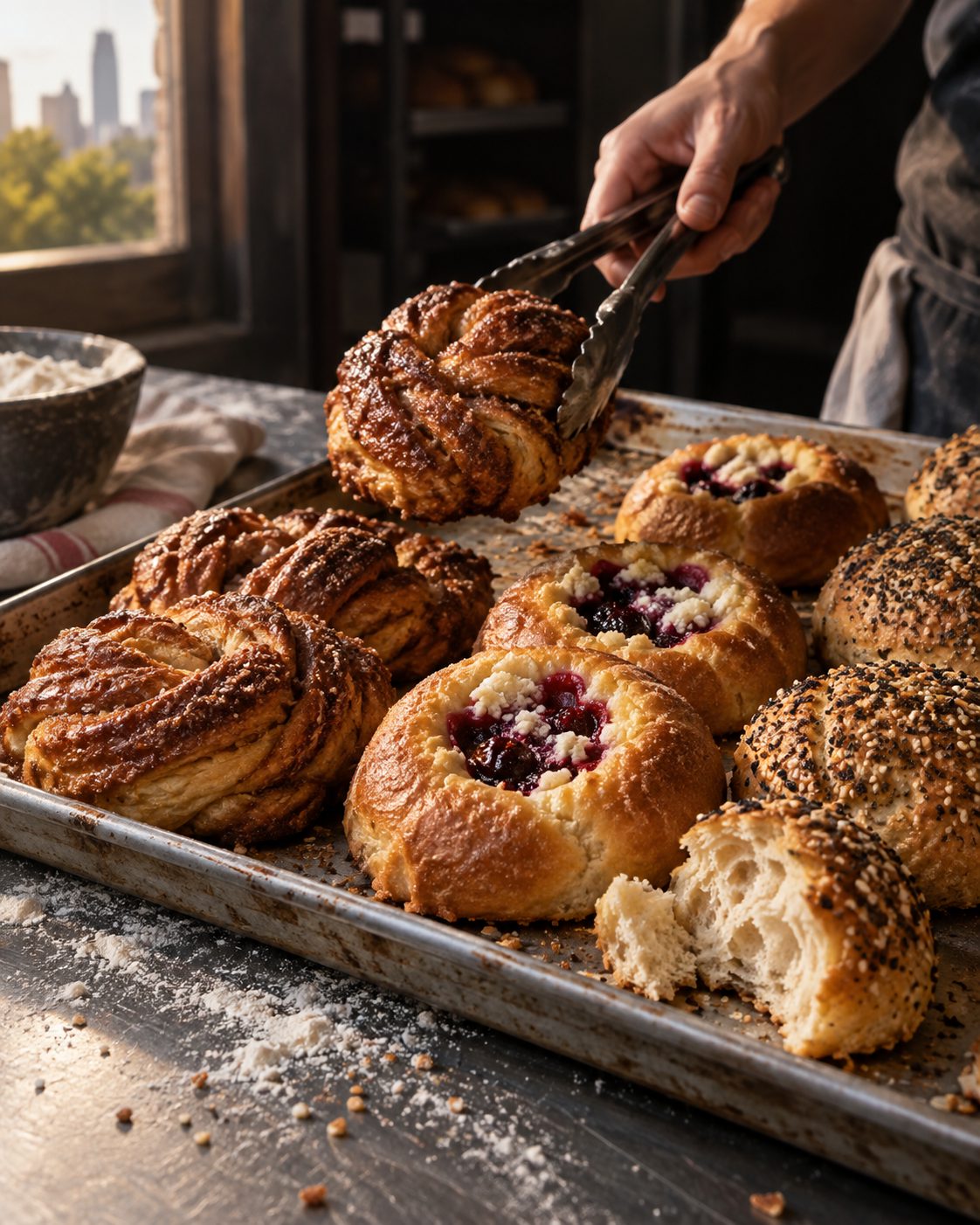
Bread is baked in the commissary: sourdough and seeded rolls every day, kolaches on Friday mornings. That is the one thing we will not buy in, because a sandwich on bought bread from a warehouse tastes like one.
Vegetables come from Texas growers when they are in season and from a wholesaler when they are not. Peppers, squash and greens in summer are local. Broccolini in August is not, and we will not pretend otherwise. The weekly menu marks which is which.
Proteins are bought whole or in large cuts and portioned by our own cooks. It costs more labour and less money, and it means we know the weight of every portion in every box.
Packaged snacks in the micromarkets are the one place we mostly buy branded goods. People want the chips they already know. We keep the shelf small and let the fresh fridge do the work.
- Baked in-house
- Sourdough, seeded rolls, Friday kolaches, grain bowl bases
- Texas-grown when in season
- Peppers, onions, squash, greens, citrus in winter
- Portioned by our cooks
- Chicken, pork shoulder, beef for braises, beans cooked from dry
- Bought branded
- Dry-goods snacks and bottled drinks on the market shelf
- Never on the menu
- Reheated frozen entrées sold as fresh
Why we refuse banquets
A kitchen that chases Saturday is late on Monday.
Event catering pays well per plate. It also eats the weekend and burns out the cooks who then have to open on Monday at 06:30. Worse, it pulls the route van off the road to haul chafing dishes. We watched other kitchens take that trade and slowly get worse at the weekday one. So we turned it down, early, and still do.
The single exception: if your team already eats with us every week, we will cook a holiday lunch for that same team, in your office, on a weekday. It rides on the normal route.
- Weddings and galas
Not for anyone. The kitchen that cooks your Tuesday lunch is not going to spend Saturday on a ballroom.
- Weekend events
The commissary runs weekdays. Staff rest at the weekend so the Monday route is right.
- One-drop party trays
A single delivery for a client we will never see again takes a slot from a site we see every day.
- Machines we cannot fix
If our own technicians cannot service it on the route, we do not install it. A dead machine for three days waiting on a third party is worse than none.
The people
About 40 of us, and most of the day we are on our feet.
No sales floor. Nobody whose job is only to answer the phone. The person who picks up when you call has probably been on the route this morning.
- CooksIn at the commissary before 06:30. Bread, bowls, braises, market stock, then the lunch pack from 11:00. They write the weekly menu with the route team's sales notes on the bench.
- Route driversOne per run, same sites every day. They carry the market restock, the milk, the cups and the lunch crates, and they collect the crates again from 14:30.
- Baristas turned techniciansThey know what a flat white should taste like, so they notice when a grinder drifts. Descaling every fortnight on machines doing around 180 cups a day, more often than most manuals ask.
- Two cafeteria managersThey run the staff canteens we operate for clients: rosters, purchasing, hygiene logs and the till. Corporate cafeteria management in Texas is mostly paperwork done on time, and they do it.
Reach a person
Call, write, or come by the commissary.
The phone is answered on weekdays from 06:30, while the route is running and until the last crates are back in the afternoon. Email is read on the same working day. At weekends the kitchen is closed and replies wait for Monday morning.
Phone
+1 (393) 555-3266Come by the kitchen
46 Market Street, Suite 4Austin, Texas 59966
United States
Before you write
Headcount on a normal day and the office address with the floor. With that we can tell you whether a market or a coffee point makes sense first. More on the contact page, and the rules we work to are in the service terms.